Course of study when in training: HND Marine Engineering
Sponsoring Company when in training: COSCO UK, but sailed on ships with Cemex UK and Faversham Ships.
Training Management Company: Clyde Marine Training
College of study: Warsash Maritime School
What inspired you to pursue a career at sea?
I had never originally considered a career at sea, or even engineering, until I began working on construction sites across different trades. After dabbling in steel fixing I eventually secured a role as an acoustic package fitter despite having no prior experience using power tools. My boss took the time to teach me the practical skills I needed, and really encouraged me, we had an amazing work relationship and I really enjoyed it. During that period, I learned how to read technical drawings and discovered that I genuinely enjoyed the engineering side of the work.
During COVID, self-employment became challenging, and I started thinking more seriously about long-term career options. I asked my boss what other trades or career paths he would recommend, and he suggested I take a look at the Merchant Navy. At the time, I had no idea what that even was, but later I researched it and came across the Marine Engineering Sponsored Cadetship programme.
One thing that always mattered to me was avoiding university debt, so the fact that the training was sponsored immediately caught my attention. I applied without fully knowing what I was getting into, I didn’t even understand how an engine worked at that point, but that decision ultimately changed the direction of my career completely.
What did you enjoy most as part of your training?
What I enjoyed most during my training was learning completely new subjects and gaining insight into an industry I previously knew nothing about. Coming from a background with no prior maritime or engineering experience, there were definitely times when the learning curve felt challenging. However, that challenge also made the process fascinating, as I was constantly discovering new aspects of the maritime world and developing an understanding of what my future role would involve.
One of the highlights of my training was joining my first ship and experiencing life at sea firsthand. I particularly enjoyed being introduced to different cultures, especially working alongside Filipino crew members. I had the opportunity to try new foods, hear different life stories, and learn from people with diverse experiences and backgrounds. The crew were incredibly welcoming and supportive, and the friendships formed during that time were meaningful, I still keep in touch with many of them today.
Where in the world have you been able to visit and what
has been your favourite?
Funnily enough, I haven’t travelled far internationally through my seafaring career so far, as most of my experience has been within UK waters. During my first ship as a cadet, I sailed between Poole and the Channel Islands, visiting Alderney, Guernsey, and Jersey. My second vessel operated along the south coast of England, mainly between Southampton and Shoreham.
After qualifying as an officer, I chose to remain on aggregate dredgers, where I now continue to sail around the south coast and into the Thames, visiting ports such as Dagenham and Greenhithe and dredging off of Lowestoft, Hastings and Eastbourne.
I genuinely don’t mind sailing within the UK. I live on the south coast myself, so I’m never far from home during crew changes, and the shorter rotations (three weeks on and three weeks off) offer a great work-life balance. There’s also something quite special about working offshore near places that are personally familiar to me; for example, when dredging off Hastings, it’s nice knowing my family are just along that shoreline.
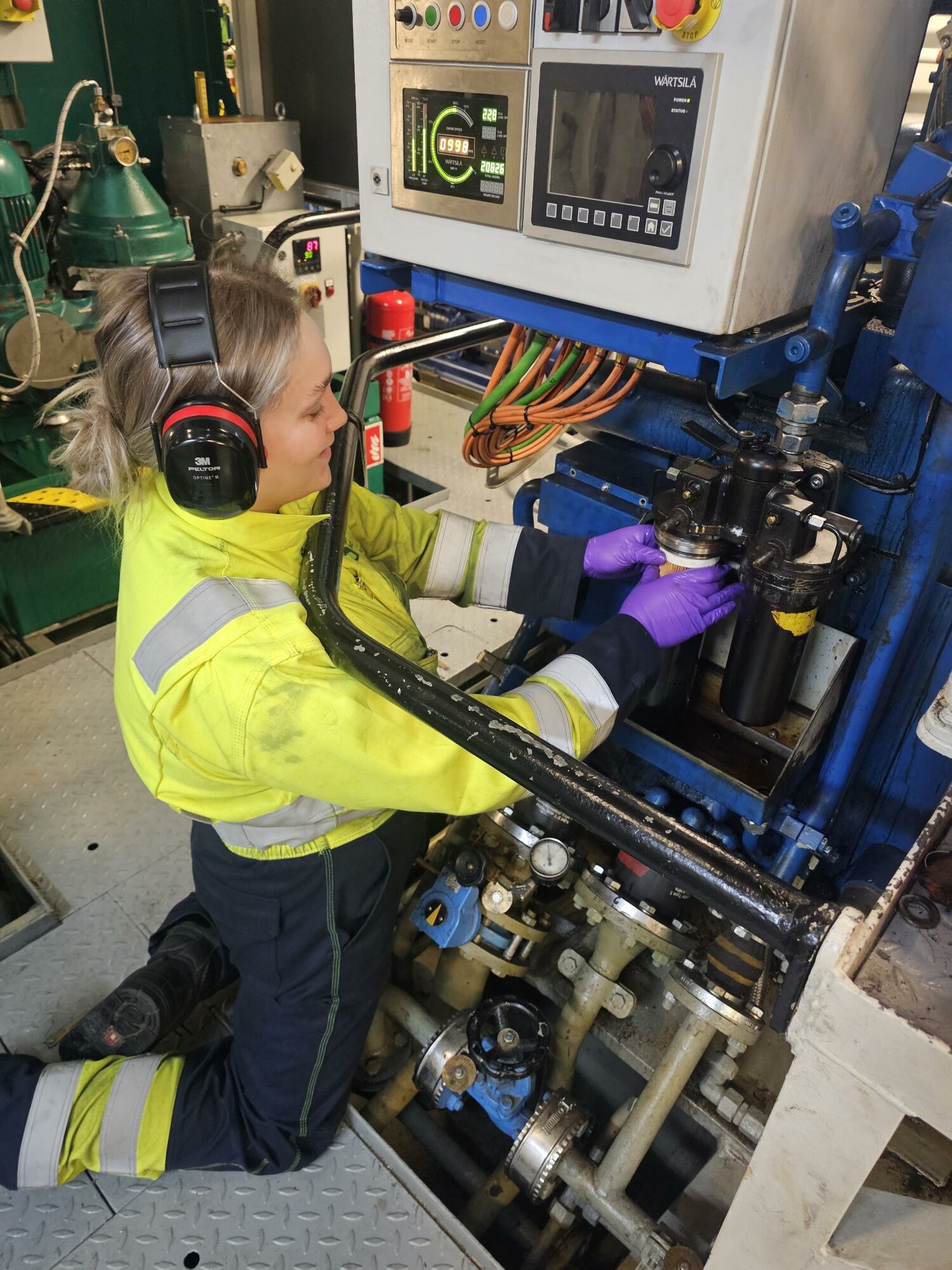
What skills and traits for you believe are most important as a 3rd Engineer?
I have two traits that I think are important for working at sea. One of the qualities is maintaining a strong willingness to learn. Although you are qualified by this stage, there is still a vast amount of practical knowledge and experience to gain. Every vessel, engine room, and crew operates differently, so continuous learning is essential. Asking questions should never be seen as a weakness. Instead, it demonstrates engagement, responsibility, and a desire to improve.
Technical ability alone is not enough onboard. The engine room is a team environment where people live and work together for long periods under pressure. Being able to “read the room”, understanding crew personalities, moods, and dynamics I think is extremely important. By recognising how colleagues communicate it allows for healthy banter without crossing personal boundaries. It also helps build trust and teamwork, which are essential for safe operations.
A strong crew depends on mutual support. Noticing when someone seems stressed, tired, or not themselves and offering support contributes to a safer and more positive working environment. Good interpersonal awareness improves morale and reduces conflict. Something which you will need to get the hang of when sailing with crews from so many different walks of life.
Looking to the future, what are the next steps in your career?
At this stage in my career, my primary focus is gaining the required sea time to prepare for and study toward my Second Engineer’s Certificate of Competency. My goal is to continue developing both technically and professionally so that I am fully prepared to take on the increased responsibility.
What advice would you give to someone thinking about starting their Career at Sea?
My advice would simply be to go for it. I’m living proof that you don’t need prior knowledge or even a full understanding of the maritime industry before starting. Before joining, I had a background in construction, and prior to that I was focused mainly on sport. I had no direct links to the industry and honestly didn’t fully know what I was signing up for.
What surprised me most is how quickly things can change. Within four years, I went from having zero knowledge of the industry to becoming qualified and starting my first role as an officer, earning a salary I never imagined at the beginning.
There were definitely challenging days where I felt like an imposter and questioned whether I belonged, but with a willingness to work hard, keep learning, and persevere, you eventually realise you are progressing more than you think. One day you look back and realise how quickly the journey has gone.
Even if you discover that a career at sea isn’t for you, it’s not a failure, the industry isn’t suited to everyone, but at least you gave it a try. The skills, discipline, confidence, and life experience gained even during your first sea phase are valuable and transferable to almost any career path.